
The wait is part of the emergency
When people picture a lockout, they imagine the moment of discovering the keys are inside. The harder part is often what comes next. You are standing outside your own front door, or beside your own car, without access to your phone charger, your wallet, your medicine or your warm clothes. You might be tired, annoyed or frightened. And you will be there for a while, because a technician has to travel to you.
That waiting window is when most avoidable injuries and bad decisions happen. People climb over balconies. They try to pry a window with a kitchen knife. They break a pane of glass and cut their arm. They walk away from a safe spot to look for help and become even more stranded. They accept a stranger's offer of assistance because the stranger seemed friendly.
A calm approach avoids most of this. You do not need to be heroic. You only need to protect yourself, protect the property from further damage, and stay reachable. This page explains how to do that in common Miami-Dade conditions, including heat, sudden rain, darkness, crowded streets and quiet parking structures. It does not give any instructions for opening locks, because opening a lock is the technician's job and trying it yourself is the quickest way to make a simple problem harder.
First, decide whether you are actually in an emergency
Before you settle in to wait, check whether the situation has crossed the line from inconvenient to dangerous. Call 911 right away if someone inside needs help, such as a child alone, a person who may be ill or hurt, or someone who does not respond. Call 911 if you smell gas or smoke, hear an alarm that suggests fire, see signs that someone has forced the door, or believe an intruder may be inside. Call 911 if a child or animal is locked in a hot car, because heat builds in a closed vehicle faster than people expect.
In those cases do not wait for a locksmith. Emergency responders can decide whether to force entry, and they have the training and legal standing to do so. A locksmith can follow up afterward to secure the door.
If nobody is at risk, and the lockout is purely about access, then you are in the ordinary, if annoying, category. You can wait calmly. Make that decision consciously. Many bad choices come from a vague feeling that everything is urgent.
Our pages on locked out with children inside, lockout with pets inside and child locked in car walk through the cases where the answer is not to wait.
Pick a safe, visible place to stand
Where you wait matters more than anything else on this list. The ideal spot is well lit, visible to other people, out of traffic, and close enough to the lockout location that the technician can find you easily.
At a house, that usually means near the front door under the porch light, or at the curb if the street is lit and active. If your house is secluded or dark, consider waiting with a trusted neighbor. In an apartment complex, wait near the leasing office entrance, the lobby or a lit common area, and tell a staff member or security guard what is happening. They may have an office where you can sit, and they can sometimes verify the technician at the gate.
In a parking lot or garage, stay near the entrance of a business that is open, or beside the attendant booth. Avoid waiting inside a dark stairwell or at the far end of a level. In a car park, stay out of the lanes where vehicles drive, since drivers looking for spaces may not see you.
On a road or shoulder, stand well away from traffic, behind a barrier or guardrail if there is one. If your car has stalled and you can stay inside it safely, keep your seatbelt on and the hazard lights running. Never stand between your car and moving traffic.
If you have to move, tell the dispatcher your new location right away, by phone or text. A technician who drives to the wrong spot wastes time and leaves you waiting longer.
Lighting, visibility and company
At night, light is your most effective protection. A lit area discourages people who might look for an easy target, and it helps the technician find you. Use your phone's flashlight if you need to see, but try not to stand in a dark corner with only a small beam, which makes you hard to see from the street.
Company matters too. If you are alone and feel uneasy, call or message someone you trust and stay on the line, or share your live location with them. Tell them the company name you called, and the details of the technician when they arrive. That simple step creates a record that someone knows where you are and who you are meeting.
If a friend or family member can come and wait with you, accept the offer. Two people attract less attention than one person standing alone at night, and two sets of eyes notice more. Having someone with you also makes it easier to check the technician's identity calmly.
If you are in a place with other people, such as a restaurant, a convenience store or a lobby with an attendant, it is reasonable to ask whether you can wait inside. Most people are understanding. Tell them you are waiting for a locksmith, and ask them to point out where you can see the entrance so you can spot the technician.
Our guide on locked out of home at night adds more on the particular problems after dark.
Miami heat, rain and storms while you wait
South Florida weather is a real factor in a lockout. Heat and humidity can be dangerous for waiting adults and are a serious risk for children, older people and pets. If you are outside on a hot afternoon, find shade, drink water if you have it, and avoid standing on hot pavement. Do not sit inside a closed car with the engine off. If you have a car with working windows, you can wait inside with the doors locked and a window slightly open, but the interior of a parked car heats up quickly, so check how you feel and move to shade if you start to feel dizzy, nauseous or unusually tired.
Rain arrives suddenly in the wet season, and lightning is a danger. If you hear thunder, do not stand under a tree or beside a metal pole. Move to a covered area, such as a porch, a carport or an entrance to a business. Keep your phone dry. Our page on locked out in the rain has more.
During or after a hurricane or tropical storm, conditions change. Streets may be flooded, power may be out, traffic signals may not work, and the technician may be delayed. Fallen branches and downed wires are hazards. Stay away from anything that looks like a power line, and do not walk through standing water. If you are locked out in the aftermath of a storm, read lockout after hurricane and lockout during power outage.
Heat, rain and storm conditions are also reasons to tell the dispatcher about your situation honestly. They cannot promise arrival at a certain hour, and no service can promise every place at every hour, but they can tell you what is realistic and whether it is better to find shelter nearby.
What not to attempt while waiting
This is the most important list in the page. People get hurt and cause expensive damage during the wait, and almost always because they decide to try something. Please avoid every item here.
- Do not climb to a balcony, a second floor window or a roof. Falls are a leading cause of injury in lockout situations, and balconies on high-rise buildings are never worth the risk.
- Do not break a window or a glass panel. Broken glass causes serious cuts, and a broken window means a repair job, a security gap and a mess to clean up on top of the lockout.
- Do not use knives, screwdrivers or credit cards on a door. Tools slip, snap and injure hands. They also damage the door and the lock, and they leave marks that can complicate a later insurance claim.
- Do not kick or shoulder the door. You can injure yourself, crack the frame, and leave the door unable to secure afterward.
- Do not try to remove the lock or take it apart. A half-disassembled lock is weaker and harder to repair.
- Do not follow a stranger into a building to get inside. Entering through someone else's access is not the same as being let in by management, and it can create trouble for you and for them.
- Do not hand your keys, ID or phone to anyone offering to help. Help from a stranger who appears on the scene is not the same as a technician you called.
- Do not leave a vehicle running unattended with the keys inside while you search for help. It invites theft.
Be careful with strangers who offer help
Lockouts attract attention. A person who sees you struggling at a door or a car may offer help, and many people mean well. But a small number take advantage of a distracted, anxious person. The risk is higher late at night and in places where people are in a hurry.
A simple rule works well: only work with the company you called. If someone approaches and says they are a locksmith, ask for the company name, identification and a written estimate, and be cautious if you did not call them. If someone offers to open your car or door in a few seconds for cash on the spot, politely decline. Do not let anyone take your keys, ID or phone, and do not move to a more secluded place at their suggestion.
The same is true of tow truck drivers who stop unasked and people who say they are from the building. Verify through the management office or the dispatcher you called. Fake locksmith operations exist, and they depend on people who are stressed and in a hurry. Our guides on locksmith scam warning signs and unmarked vehicle and no-ID red flags describe what to watch for.
If anyone makes you uncomfortable, trust that feeling. Move toward lights and people, call someone, and if you feel threatened call 911.
Keep yourself ready for the technician
Use the waiting time productively. A little preparation shortens the visit and reduces the stress of the final stage. First, stay reachable. Keep your phone on, with the ringer up, and answer calls from unknown numbers during this period, since the dispatcher or technician may be calling.
Second, gather your documents. A photo ID is the key item. Add something that ties you to the property or the vehicle, such as a lease, a utility bill, a registration or a photo of one stored on your phone. If you are locked out of a building where you are a tenant or employee, have the name and number of the manager or owner ready. Our guide on what ID to have ready for a locksmith explains what is typically accepted.
Third, think through what you will say. Our emergency locksmith call checklist lists the facts that help. Fourth, make notes of what the company told you on the phone: the name, the person you spoke to, the quote, and the service call charge. When the technician arrives, you can compare.
If you can do so safely, take photos of the door, the lock and any damage. Our page on photos that help a locksmith suggests good angles. And if you are waiting at a property you manage or rent, tell the building staff or the owner, so nobody mistakes the technician for an intruder.
When the technician arrives
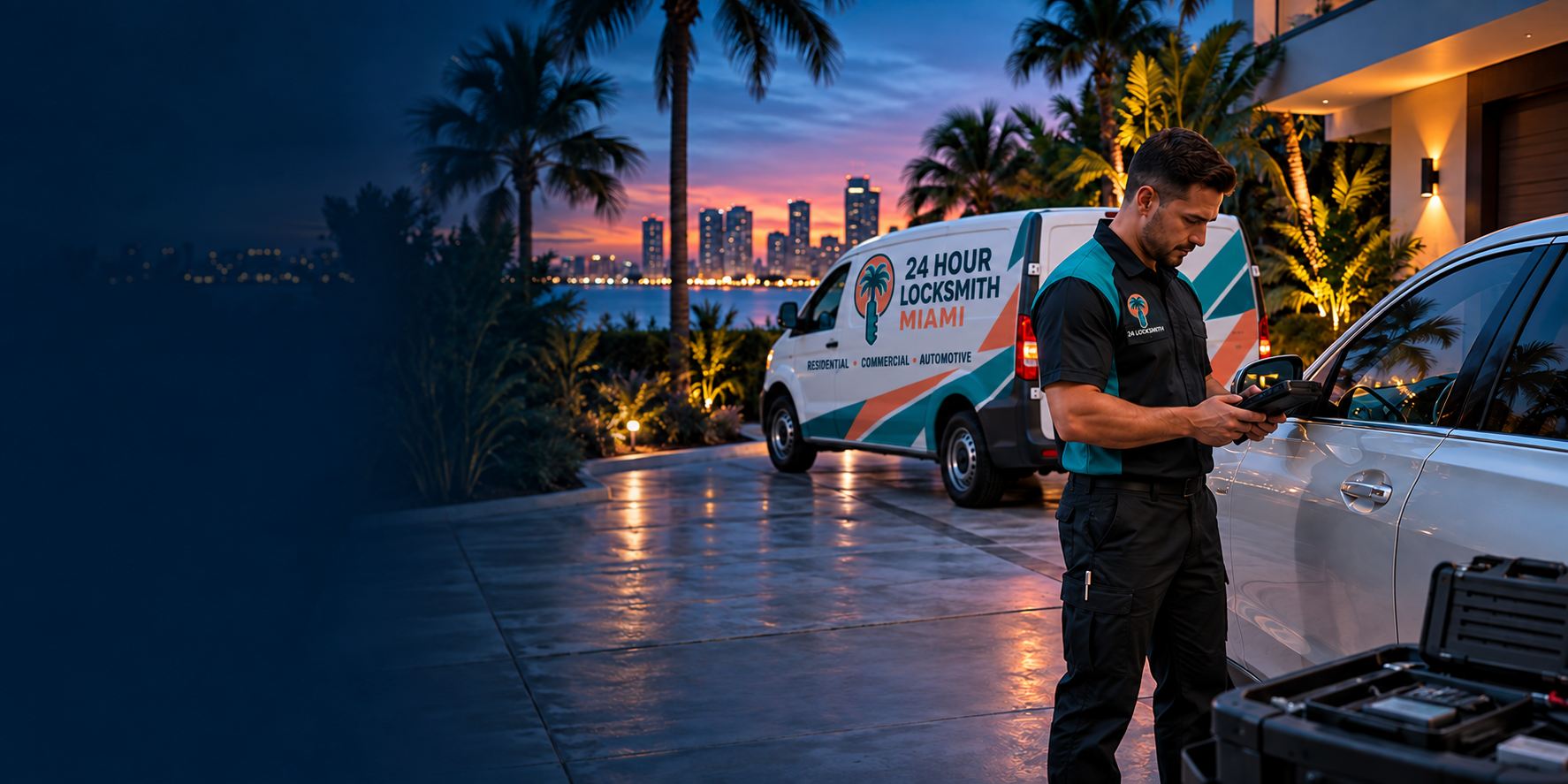
When a vehicle pulls up, stay calm and let the technician introduce themselves. Check that the name and company match what you were told on the phone. Ask for identification, and confirm the quote and the service call charge before any work starts. A professional expects these checks. If you waited with a friend or on the phone with someone, say so, and tell them when you have confirmed the technician. Our guide on how to verify a locksmith is legitimate is a short list to follow.
Remember that your own identity will be checked too. The technician will ask for ID and proof of authority, which protects you and the real owner. Have the documents in your hand.
While the work proceeds, stay nearby but out of the way, ask questions if something is unclear, and do not feel rushed. Afterward, test the result before the technician leaves. Try the key, lock and unlock, open and close the door, and look for damage. Ask for a receipt. The after the locksmith leaves checklist covers the steps.
If anything feels wrong at any point, you may stop, step away and call the dispatcher or, if you feel unsafe, 911. Your safety matters more than the repair.
Making the next lockout calmer
Once you are back inside, a few small changes can make the next lockout easier, or prevent it. Keep a spare key with someone you trust, such as a neighbor or a family member, or in a properly installed key safe, not under a doormat. Think about a keypad or smart lock if you often forget keys. Keep a charger and a phone with you whenever you step out, since a phone is your lifeline in a lockout.
Put your essentials in a place you carry, not in a place you leave behind. If you have a car, keep a second key in a safe place, and consider adding a spare to a purse or bag you always bring. Our guides on lockbox and key safe planning and key control for families explain how to set up spares without weakening your security.
Think about the people in your household. Children, older adults and anyone who might need to open the door when you are away benefit from a plan. For older relatives, elderly parent lockout and elder care home access planning have more.
Waiting out a lockout is never pleasant, but it does not have to be dangerous. Stay safe, stay visible, stay reachable and let the professional do the opening. When you need help, call and tell the dispatcher where you are and what is happening, and they will explain how the visit works.
Questions people ask
Where is the safest place to wait for a locksmith?
Choose a well lit, visible spot out of traffic and close enough for the technician to find you. At a home, that is usually near the front door or with a neighbor. In a lot or garage, stand near an open business or attendant. If you move, tell the dispatcher your new location immediately.
Should I try to get in through a window or balcony?
No. Climbing and breaking glass are common causes of injuries during lockouts, and the repair afterward is more involved than the lockout itself. The wait is short compared with the harm a fall or a deep cut can cause. Let a trained technician open the door without damage.
What if someone offers to open my car or door right now?
Politely decline and wait for the company you called. People who offer help on the spot may not be who they say they are, and handing over keys, ID or a phone to a stranger is risky. Check the technician's company name and identification when they arrive.
What should I do if it starts to rain or storm?
Move to cover, such as a porch, carport or a business entrance, and stay away from trees, metal poles and standing water. Keep your phone dry and tell the dispatcher about the weather. In a severe storm, personal safety comes before the lockout, and the technician may need to adjust the visit.
Is it safe to wait inside my car in the heat?
Only briefly and with care. A closed parked car heats up fast, and heat is dangerous for children, older people and pets. If you have working windows and shade you may wait inside with the doors locked, but move to cool, shaded space if you feel dizzy or unwell. Never leave a child or pet in a parked car.
Do I still need ID if I am clearly locked out of my own place?
Yes. A professional confirms authority before opening a door or programming a key, because the same service could be misused by someone with no right to the property. A photo ID plus proof of address or ownership is standard, and a photo of a document on your phone can help if papers are inside.
Describe the situation by phone and we will tell you what the job involves. Quotes are given by phone. Jobs that cannot be quoted without seeing them need a technician on site, and the service call charge is explained on the phone before anyone is dispatched.
(786) 539-3980Related pages
Written by Claude (AI) (AI) for 24 Hour Locksmith Miami.