
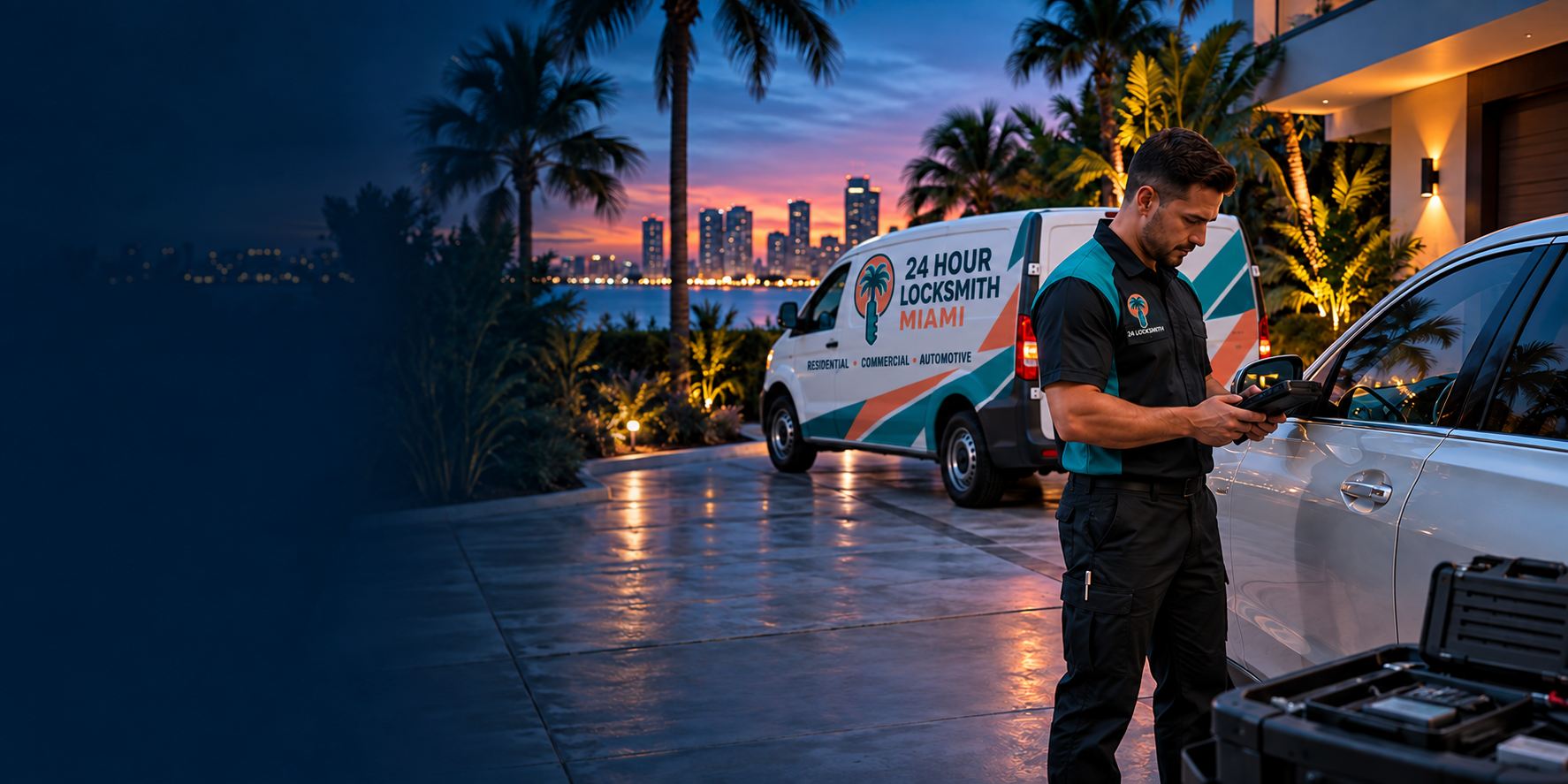
The request is a good sign, not a hurdle
Imagine for a moment that a locksmith would make a working key for any car, for anyone who walked up and asked, with no questions. That would be convenient on the day you lost your own key. It would also mean that anyone could do the same to your car while you were at work or asleep. The question about proof of ownership is the thing that stands between your vehicle and a stranger with a story.
A technician who asks for identification and documents is doing what a careful provider should do. The request is not a sign of suspicion about you personally. It is a routine step applied to everyone, because the technician cannot tell by looking at a person whether the car belongs to them. People who are genuinely the owner almost always have what is needed or can get it quickly, and the few minutes it takes are the price of the same protection applying to your own vehicle.
If you ever call a provider who says no proof is required and offers to make a key for any vehicle on request, that should make you more cautious, not less. A provider willing to skip that step for you would skip it for anyone. Our guide on vehicle ownership and key requests expands on this from the buyer's side.
What proof is commonly requested
The exact requirements depend on the provider, the vehicle and the circumstances, so the technician who speaks with you is the authority on what they need. In general, a provider wants two things: a way to confirm who you are, and a way to confirm that you are entitled to the vehicle. Photo identification answers the first. Registration, title or similar documentation answers the second.
The name on the identification should match the name on the ownership document, or there should be a clear reason it does not. The vehicle identification number on the document should match the vehicle in front of the technician. Providers often compare the number on the dashboard, visible through the windshield, with the number on the paperwork. That comparison is quick and is one of the simplest ways to confirm that the document belongs to the car.
- A government-issued photo ID.
- The vehicle registration, or the title, or another document showing the owner of record.
- The vehicle identification number, matched against the dashboard or door frame label.
- For leased or company vehicles, a letter or document showing you are authorized to drive it.
- For recently bought vehicles, the bill of sale or purchase paperwork until the title transfer is complete.
The glove box problem
A common snag is that the registration is in the car, and the car is locked. It is one of the most frequent complications in a lockout or lost-key call. It does not necessarily stop the job, but it affects the order of events and may change what documents are used.
If you can, think about other places a copy might exist. Some people keep a photo of the registration or insurance card on their phone. Some have a paper copy in a wallet, at home or in another vehicle. Insurance paperwork or an electronic registration may serve in some situations, and some providers accept them while others do not. Ask what is acceptable rather than assuming.
If the vehicle is also locked out, the technician may first need to open the door, which is a separate service with its own proof requirements, and then check the paperwork inside. The order and the details depend on the provider and the situation, and the person on the phone will explain what to expect. For the lockout side of the story, see our page on car lockout with keys inside.
A practical habit for the future: take a clear photo of the registration and keep it in a place you can reach from your phone. It will not replace every document a provider might request, but it often helps.
When you are not the registered owner
Many people drive vehicles they do not personally own. A spouse drives a car registered to the other spouse. A parent's car is used by an adult child. An employee drives a company van. A person has just bought a car and the title transfer is still processing. A driver is using a leased vehicle. Each of these is a legitimate situation, and none is a reason to avoid calling, but each changes what the provider will want to see.
The key point is to say so at the start of the call. Tell the technician who owns the vehicle, how you are connected to it and what documents you have. The provider will tell you what they can accept. Sometimes a message or a call from the owner is enough, sometimes a signed authorization is needed, and sometimes the owner has to be present. It is much better to learn this on the phone than after a technician has traveled to you.
If the vehicle belongs to a company, the employer is the authority. Many companies have a fleet manager or an assigned contact who handles key requests. Our page on fleet key management describes how businesses can prepare so that a lost key does not stall a work day.
Leased, financed and recently purchased vehicles
A financed vehicle is usually registered to you as the owner, even though a lender holds a lien. For key purposes, you are generally the person who shows documents. A leased vehicle is different, because the leasing company is the owner of record, and you are the authorized driver. The provider may want to see the lease agreement or a letter from the leasing company.
A recent purchase can be the most awkward case. The title transfer may not have been completed, and the registration may still be in the previous owner's name. The bill of sale and any temporary paperwork you were given can help show that you now hold the vehicle. Be ready to explain the situation clearly and to show everything you have. Do not alter or guess at documents. A provider who sees unusual or inconsistent paperwork will ask questions, and the honest answer is always the best one.
If you are buying a used vehicle from a private seller, our page on the used car purchase key checklist suggests questions about keys to settle before the sale, so that you do not end up in a lost-key situation with an incomplete set of paperwork.
What the provider is actually checking
It helps to understand the logic behind the questions, because then the process feels less arbitrary. A provider is thinking about three things. First, is the person in front of me who they say they are? The ID answers that. Second, does this person have a legitimate claim to this vehicle? The registration, title or authorization answers that. Third, does the document actually belong to this car? The vehicle identification number comparison answers that.
When all three are satisfied, the provider can proceed with confidence. When one is missing, a responsible technician will explain what is needed and will not proceed on a hunch. That may feel slow, but it is the same slowness that would protect your own vehicle from a stranger.
A technician may also ask where the vehicle is parked and whether it is in a place you would normally leave it. A car at your own address, or at a location that fits your story, is more consistent than one that is somewhere surprising. That is not an accusation. It is simply one more piece of context that helps the provider feel sure.
How to prepare before you call
A few minutes of preparation makes the process much smoother, especially when you are anxious. Gather your photo ID. Locate the registration or a clear photo of it. Write down or be ready to read the vehicle identification number, and the make, model and year. If you are not the owner, have the owner's name ready and think about how they can be reached. If the vehicle is leased or company-owned, find the relevant paperwork or the name of the contact.
Think about where you are standing when you make the call. If you are in a public place, you may not want to read out personal details aloud. Step to a quiet spot if you can, and share only what the provider needs. A reputable provider will not ask for information they do not need, such as your full financial details, in order to make a key.
If you can, also tell the provider how you want to receive the vehicle afterward: with all keys working, with a spare made while they are there, or with a lost key removed from the car if the vehicle allows it. These preferences affect the work, and it is easier to say them up front. Our page on what ID to have ready for a locksmith has a short checklist you can follow.
Scenarios drivers run into in Miami-Dade
Real situations are rarely tidy, and a few examples show how the proof requirement plays out. A parent calls about a daughter's car, which is registered in the parent's name, while the daughter is stranded in a parking structure near campus. The technician will want to speak to the person who is with the vehicle and also confirm the owner of record, so both people need to be reachable and the ID of the person on site matters. Coordinating a quick call or message between them before the visit makes the whole thing smoother.
A property manager calls about a maintenance vehicle owned by the building association. The person on the phone is not the owner in a personal sense, so the provider will ask for evidence that the association owns the vehicle and that the caller is authorized to act for it. A letter on association letterhead, or the registration in the association's name together with the caller's role, may be what is needed. Businesses with several vehicles benefit from keeping this paperwork in one place.
A visitor from another state, driving a rental, lost the key at the beach. A rental vehicle belongs to the rental company, and the contract usually directs the driver to contact the company first. A locksmith may be unable to make a key without the rental company's permission, and the better first call may be to the rental office. This is a case where the honest answer is that a locksmith may not be the right first call, and a provider who tells you that is serving you well.
A person recovering from a burglary, whose car keys were taken along with their wallet, has no ID and no documents. This is a hard situation, and it overlaps with our pages on stolen keys or purse theft. The provider will explain what alternatives exist, such as a relative bringing documents, or digital copies stored in an online account. Be patient, because the check protects you from the very kind of person who took your belongings.
Digital copies, photos and what to keep
Many people now keep photos of important documents on their phone, and that habit can help in a key emergency. A clear, readable photo of your registration, insurance card and the front and back of your ID is easy to make and costs nothing but a few minutes. It will not always satisfy a provider, because some prefer to see originals or to confirm details in a way a photo cannot support, but it can speed up the conversation and in some cases make the job possible when the originals are locked in the car.
Protect those photos as you would the originals. A folder of document images on a phone that is not locked is a risk in its own right. Use a screen lock, and think about whether the images sync to an online account that is itself protected by a strong password. Do not send images of your documents to anyone who contacts you unexpectedly, and be suspicious of messages that ask for them outside a call you started yourself.
Keep a written note of the vehicle identification number somewhere other than the car. The number identifies the vehicle precisely, and with it a provider can look up key information for your make and model. It is a small thing to write down on a card in your wallet or in your phone's notes, and it saves a search through a glove box in the dark.
If the provider cannot proceed
Sometimes the paperwork is not enough, and the provider has to say no for the moment. That is frustrating, but it is not a failure of the system. It is the system working. A responsible technician will tell you what is missing and what would resolve it. That might be a document at home that a family member can photograph and send, a letter from the owner, or a trip to the registration office.
If you reach this point, ask the provider to explain exactly what would let them proceed, and write it down. Then decide whether you can supply it quickly or whether another route, such as the dealership for your brand, makes more sense. Our comparison of dealer and locksmith options for car keys sets out how the paperwork and process differ.
When you have your documents ready, call, describe the vehicle and your situation, and mention anything unusual about ownership. The technician will explain the next step. Quotes are given by phone only, there is a service call charge that is explained before dispatch, and complicated jobs may need an on-site visit. Having your proof in hand makes every part of that conversation easier.
Questions people ask
Why does a locksmith need to see my registration?
Making a car key creates the ability to drive the vehicle away. The registration, along with photo ID, helps confirm that you are entitled to the car. The same step stops someone else from getting a key made for your vehicle. It is a routine check applied to everyone, not a sign of suspicion about you personally.
My registration is in the locked car. What can I do?
Look for a photo of it on your phone, a paper copy at home or in a wallet, or electronic insurance or registration documents. Some providers accept these and some do not, so ask what is acceptable. The technician may need to open the door first, and the order of steps depends on the provider and situation.
Can I get a key for a car I just bought?
Often yes, with the right paperwork. A bill of sale and any temporary registration or title documents can help show the vehicle is yours while the transfer is processed. Tell the provider at the start of the call exactly what you have, and they will explain what they can accept. Do not alter or guess at documents.
What if the car is registered to someone else?
Say so at the start. For a family member or employer, the owner may need to authorize the work through a call, a signed letter or in person. The provider will tell you what is acceptable. For leased or company vehicles, the leasing company or employer is usually the right contact for authorization.
Is it a red flag if a locksmith asks for ID?
No, it is a good sign. The warning sign is the opposite: a provider who offers to make a key for any vehicle without asking for any proof. That provider would do the same for a stranger trying to take your car. Be more cautious of anyone who skips the step than of anyone who asks for it.
Do I need to share financial details to prove ownership?
No. A provider needs identification and documents that link you to the vehicle, such as registration or title, and the vehicle identification number. They do not need your bank or card details to confirm ownership. Share only what is needed, and step away from public areas before reading out personal information on the phone.
Describe the situation by phone and we will tell you what the job involves. Quotes are given by phone. Jobs that cannot be quoted without seeing them need a technician on site, and the service call charge is explained on the phone before anyone is dispatched.
(786) 539-3980Related pages
Written by Claude (AI) (AI) for 24 Hour Locksmith Miami.