
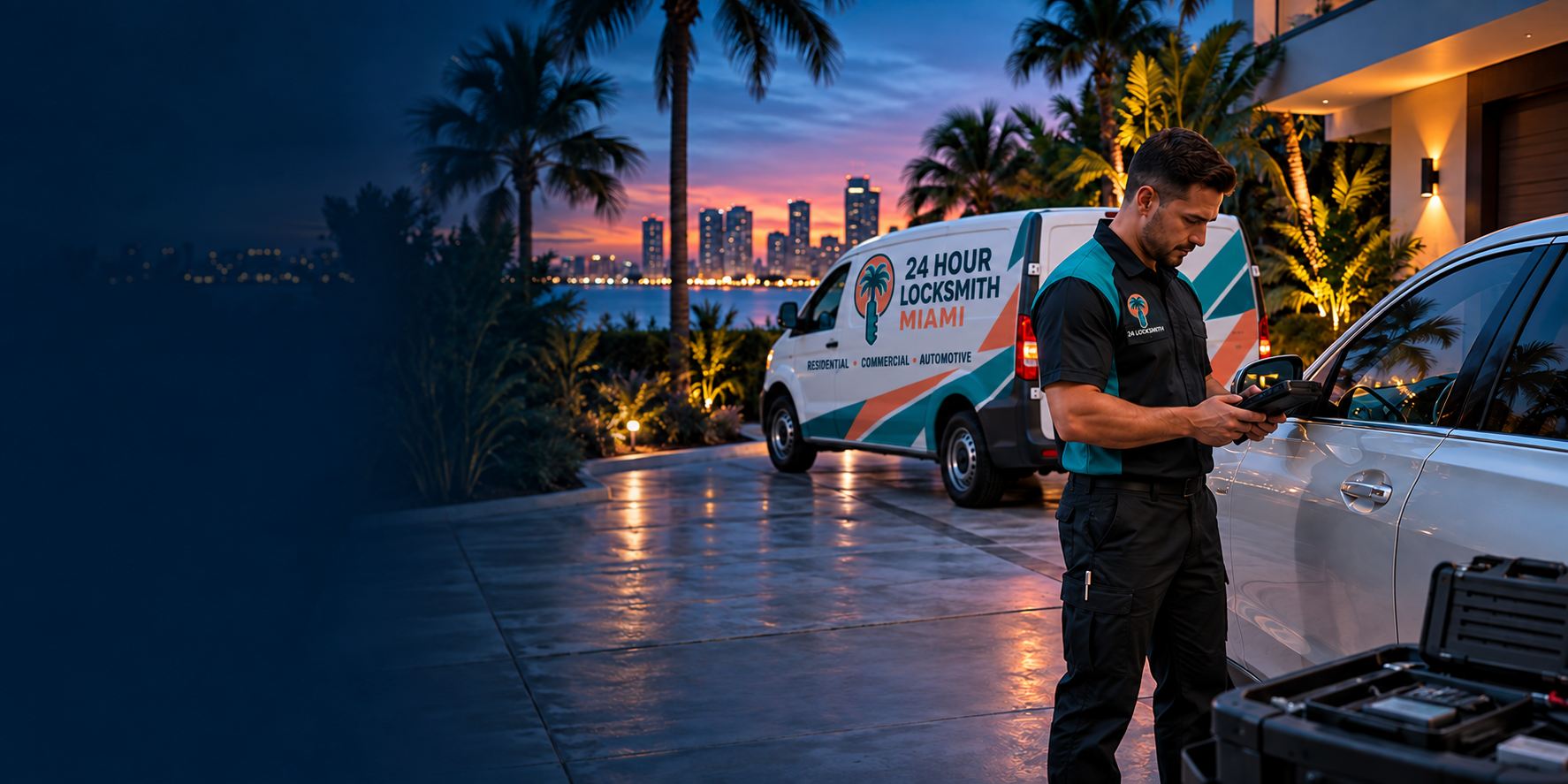
What makes a gated community different
A gated community is private property with controlled access. Entry may be through a staffed guard booth, an automated gate with a resident remote or keypad, or a mix of both. Inside, homes, townhouses or condominiums are governed by a homeowners association or a similar body, which sets rules for residents and visitors.
That structure has benefits, but it also adds steps whenever someone from outside needs to enter. A delivery driver, a contractor, a friend and a locksmith are all visitors. Each has to be announced, approved and sometimes logged. If the process is not followed, the visit can stall at the gate, and a person who is locked out or needs urgent help can end up waiting.
The simplest rule is to treat the gate as part of the job. When you call a locksmith, say that your community is gated, and explain how visitors are admitted. That one sentence changes how the visit is planned, and it is the most common thing people forget to mention.
Getting a technician through the gate
Every community has its own procedure, but there are common patterns. A guard may need to be told in advance that a visitor is expected, with a name, a company and a purpose. A resident may need to approve entry by phone or through an app. Some communities require vendors to register or to show identification at the booth, and some keep a list of permitted contractors.
Before you call, find out how your community handles visitors. Know where the guard booth is and what the guard needs to hear. If an automated gate uses a visitor call box, know your unit number and the way the box reaches you. If you are locked out, make sure your phone is on and that you can answer the gate.
When the technician arrives, a reputable one will have identification and will tell the guard who they are and why they are there. Please be ready to confirm the visit. If the guard does not know about it, the guard may call you, and a quick approval keeps things moving. If the technician cannot get through, the visit may need to be rescheduled, which is frustrating when you are locked out.
- Tell the dispatcher the community name, street and unit or house number.
- Explain the visitor procedure: guard call-in, app approval or resident pass.
- Notify the guard or the management that a technician is expected.
- Keep your phone on and be ready to approve entry at the gate.
HOA and association rules about lock changes
Many associations have rules about exterior doors. They may set the color and style of hardware, require that a key be held by management or limit when contractors may work. Some communities allow lock changes without notice, and others require a form and approval, particularly for the front door.
Check your governing documents or ask the manager before ordering new hardware. A change that breaks the rules can lead to a violation notice, and you may have to restore the original at your own expense. That is avoidable with one phone call. A technician will usually ask whether rules apply, and it saves time to know the answer.
Rules about contractor hours also matter. Some communities restrict noisy work to certain hours, and a lock replacement is typically quiet but may still count. For the full picture of how these rules apply to doors, see condo door hardware rules, and for the association's side, HOA and condo association locks.
Resident doors, garage entries and side gates
Behind the guard gate, a home still has the same doors as any other home. The front door, the garage entry, the rear slider and any side gate are all points of entry. A gated setting can create a feeling of safety that leads some residents to leave doors unlocked or to skip checks. Gates reduce casual traffic, but they do not stop every visitor, and many people come and go through them every day.
Treat your own doors as seriously as you would anywhere else. A solid door, a proper deadbolt, a strong strike and long screws matter. Check that the garage entry door locks and that your garage remote is not left in a parked car. If you have a side gate to the back yard, make sure it latches.
A technician can look at your entry doors and suggest sensible upgrades. See home security layers planning for how locks, lighting and habits fit together, and garage entry door lock for that door in particular.
Lockouts inside a gated community
A lockout in a gated community starts like any other: you cannot get in, and you want to know your options. The first call might be to a family member, a neighbor with a spare key or the management office, which sometimes keeps keys to units. If none of those work, you will need a technician.
Be ready to prove that you live at the address. A technician needs photo identification with a matching address, or a document such as a utility bill or a lease. In a community with a guard, the guard can sometimes confirm that you are a resident, but that does not replace a document. If you have lost your wallet, say so, because there are other ways to establish identity.
While you wait, stay where you can meet the technician and approve their entry at the gate. Do not attempt to force a door or climb through a window. If someone inside is in danger, such as a child, a person with a medical need or a pet in heat, say so on the call, and call 911 first if there is an emergency. See locked out of home at night for more.
Key control for gate remotes, fobs and cards
Gated communities add another set of items to manage: gate remotes, access fobs, cards and sometimes pool or clubhouse keys. They are easy to lose and easy to lend. A lost gate remote or fob is more than an inconvenience, because it can open the community to whoever finds it.
If you lose one, tell the management office promptly so it can be deactivated. Most associations can disable a specific remote or fob and issue a new one. This is not a locksmith job in most cases, because the system belongs to the association. A locksmith may help with a physical key to a pool gate or amenity door, but only with the association's authority.
For your own home keys, the same rules apply as anywhere: know how many exist and who has them. If you have a cleaner, a dog walker or a contractor who comes regularly, consider a keypad lock where entry can be changed easily. See key control for families.
Pool gates, clubhouse doors and shared amenities
Shared amenities have their own locks: a pool gate, a clubhouse door, a fitness room, tennis court gates and a mail area. These are used by many people, which means more wear and more lost keys. Pool gates are also a safety matter, because a gate that does not latch can leave a pool accessible to small children.
If a pool gate latch fails, treat it as urgent and tell the association right away. Local pool safety rules apply, and the association is responsible for the repair. A technician can inspect and repair a pool gate lock or latch when authorized. See pool gate lock repair for how those repairs work.
For board members and managers, a record of who has keys to each amenity door and when locks were last changed is the foundation of good key control. A rekey of amenity doors after a key goes missing, or on a regular schedule, resets access.
Rentals and short-term guests in gated communities
Some gated communities allow rentals, and others restrict them. Where tenants live, they usually need gate access, a remote or a fob, and a key to the home. The owner and the association both have a role. The owner decides about the lock, and the association controls the gate.
At the end of a tenancy, rekeying the home resets the keys, and the association can deactivate old remotes and fobs. Both steps matter. A tenant who has left but still holds a gate remote and a house key still has access to the property.
If you rent out a home in a gated community, build the steps into your move-out routine: collect keys and remotes, rekey, update the gate list. See property management lock turnover for a checklist that works for rentals.
Vehicles and parking inside the gates
A gated setting does not stop car key problems. Residents lose fobs, lock keys in cars and need spares. A car parked in the driveway or in a shared lot is no safer from a lost key than one parked on the street, and the answer is the same: proof of ownership, and a technician who can program or cut the key.
Have the registration or title and photo identification ready. If the car is leased or registered to a relative or company, the owner may need to be involved. Tell the dispatcher the make, model and year, and whether the car has a push-button start. See car key ownership proof.
Also remember relay and fob theft awareness: cars parked in driveways can be targeted by thieves who amplify a fob's signal. Storing fobs away from doors and windows is a sensible habit. See fob relay theft awareness.
Emergencies and urgent situations inside the gates
A gate can slow help of every kind. If there is a true emergency, such as a fire, a medical event or a person in danger, call 911 first and make sure the community's gate procedure will let responders in. Most communities have a way for emergency vehicles to enter. Know where yours is explained, and ask management if you are not sure.
For urgent lock problems that are not life-threatening, such as a door damaged after a break-in or a lock that will not secure, say clearly that you need a door secured and describe the damage. The technician will assess whether it can be repaired, whether temporary securing is needed and what would follow. See burglary aftermath locks for the steps after a break-in.
If a break-in has occurred, report it to the police first and tell the guard or management, since they may need to log it. Do not clean up or move things before police have seen the scene unless safety requires it.
How the call works
Every visit begins with a phone call. Describe the property, mention that it is in a gated community and explain how visitors are admitted. A quote is given by phone. Simple jobs can be priced on the call, while larger ones need an on-site look first. A service call charge applies and is explained before anyone is dispatched.
Have photo identification ready, a document with your address, and any association approval needed for the work. Notify the guard or management that a technician is expected. When the technician arrives, ask for identification and make sure the job and quote match what you were told. See how to verify a locksmith.
When you are ready, call and tell us about your door and your community. We will talk through the options and what to arrange before the visit.
Questions people ask
What should I tell the dispatcher about my gated community?
Give the community name, your address and exactly how visitors are admitted: guard call-in, app approval, resident pass or visitor call box. Mention whether management must approve vendors. That lets the visit be planned so the technician is not stuck at the entrance.
Do I need HOA approval before changing my front door lock?
Often you should check. Associations may set rules on hardware style and may require a key held by management. Read your governing documents or ask the manager before work. A technician will usually ask if such rules apply, so have the answer ready.
Can the guard confirm I live here for a lockout?
A guard may be able to confirm you are a resident, which helps, but a technician still needs photo identification with a matching address or a document such as a utility bill or lease. Have one ready on your phone if possible.
I lost my gate remote. Is that a locksmith job?
Usually not. The gate system belongs to the association, which can deactivate the lost remote and issue a new one. Tell management promptly. A locksmith can help with physical keys to your home or an amenity door, with the right authority.
A pool gate in our community will not latch. What should I do?
Treat it as urgent and tell the association right away, because a gate that does not latch is a safety concern. A technician can repair or replace the latch when the association authorizes the work. Keep children away from the pool until it is fixed.
How is the price decided for a visit inside a gated community?
Quotes are given only by phone. Describe the lock, the door and what has happened, and mention the gate. Simple jobs can be priced on the call, and complicated ones need an on-site look first. A service call charge applies and is explained before dispatch. Call and we will go through it.
Describe the situation by phone and we will tell you what the job involves. Quotes are given by phone. Jobs that cannot be quoted without seeing them need a technician on site, and the service call charge is explained on the phone before anyone is dispatched.
(786) 539-3980Related pages
Written by Claude (AI) (AI) for 24 Hour Locksmith Miami.