
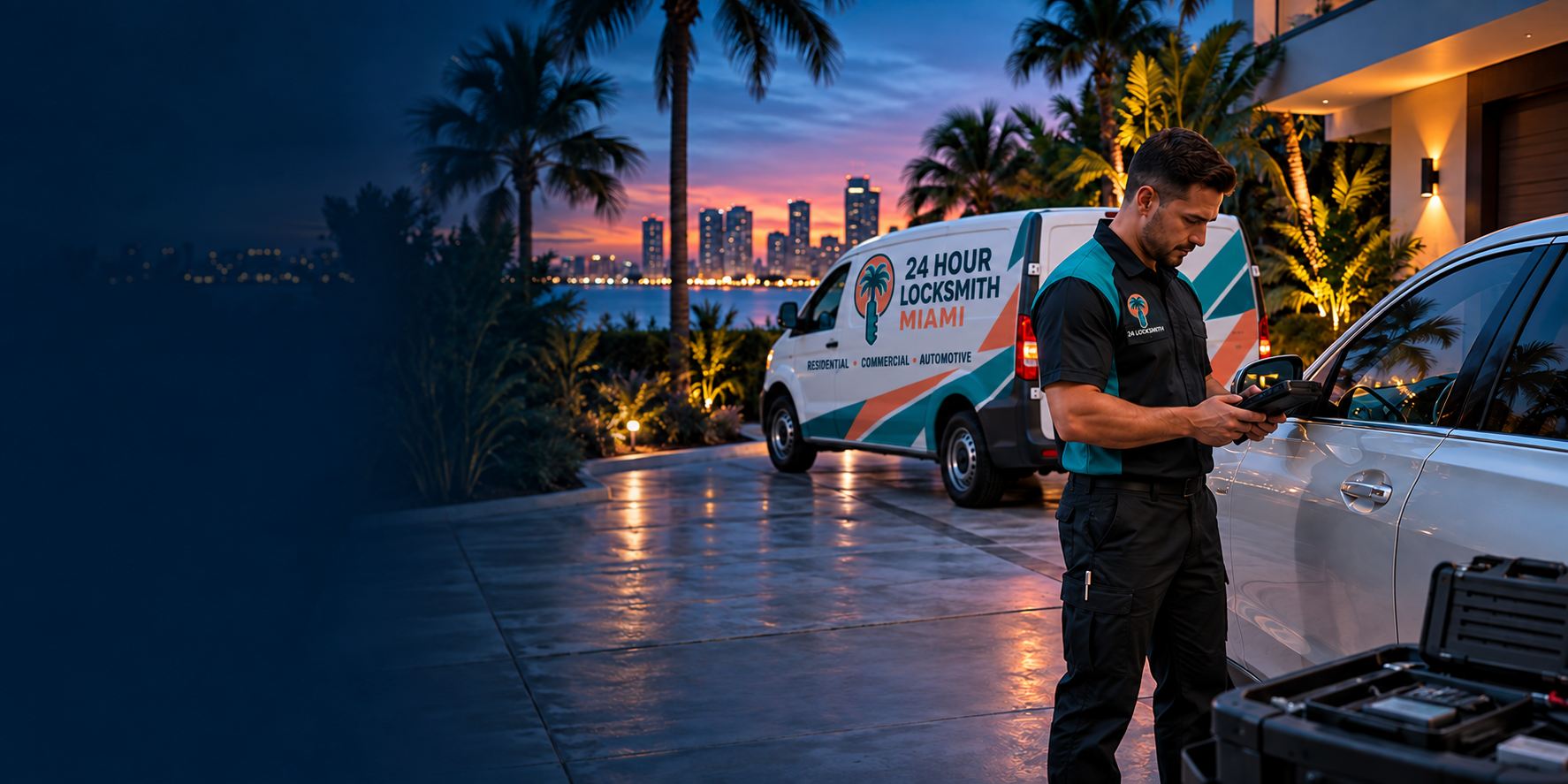
A different kind of property
Drive south and the buildings spread out. Instead of a house, a fence and a neighbor ten feet away, you find acreage, long driveways, nurseries, fruit groves, storage buildings and houses set well back from the road. Alongside these are newer subdivisions with the familiar layout of suburban streets. The area holds both worlds, and the lock needs differ between them.
On a larger property the question is not just whether the house door locks. It is how many separate things need securing: the gate at the road, the house, a detached garage, a workshop, a pump house, a shed with tools and perhaps a trailer or equipment. Each has its own lock, and over time the keys multiply. A ring with fifteen keys and no labels is a common sight, and sorting them out is often the first job on a visit.
Distance also changes the stakes. A lock that fails near a busy street can be fixed quickly by a neighbor or a passerby noticing. A gate left unsecured on a long driveway may go unnoticed for days. That is why owners of larger properties tend to think harder about durable hardware, key control and a plan for when something breaks.
- Count every lockable structure on the property, not just the house.
- Label keys by door, using a private marking only you understand rather than a plain address.
- Think about which locks guard valuable tools or equipment.
- Plan for what happens if a gate lock fails far from the house.
Rural gates and long driveways
The gate at the end of a driveway is the first layer of security for many properties here. It may be a swing gate, a sliding gate or a simple pipe gate on a chain. Some are operated by electric openers; others are opened by hand. All of them are exposed to sun, rain, dust and the occasional impact from a vehicle that misjudged the turn.
Common problems include a chain and padlock that has seized with rust, a latch that no longer lines up because the gate has sagged, and an opener whose lock or release is jammed. A technician can address the lock side of these. Sagging gates, bent posts and failed electric operators may belong to a fence or gate contractor, and an honest technician will tell you which part is which instead of replacing a lock that is not at fault.
If you share a driveway with neighbors, key control gets complicated. Several households may hold keys, and nobody can say how many copies exist. Rekeying a shared gate lock and handing out new keys, with a written record, resets the situation. Everyone who uses the gate should agree on who holds the spare and who pays for repairs before the work starts, so no one is surprised later.
- Test the gate latch and lock in both open and closed positions.
- Look for rust at the shackle, hinge and hasp.
- Check whether the gate sags and drags when opened.
- If shared, agree with neighbors on who holds keys.
Barns, sheds and outbuildings
Outbuildings carry real value: mowers, generators, ladders, irrigation parts, tools and sometimes chemicals or fuel. Yet they often have the weakest locks on the property, a light hasp with a small padlock fixed with short screws to a thin wood door. Someone with a crowbar can defeat that setup in seconds. A better arrangement pairs a sturdy hasp, mounted with through-bolts or long screws into solid framing, with a padlock designed for outdoor use.
Metal buildings and prefabricated sheds come with hardware sized to keep costs low, and replacing the lock with a stronger one may involve modifying the door. A technician can look at the structure and advise what is practical. Sometimes the best advice is that the door itself is too light for the contents and needs reinforcement before the lock matters.
Agricultural and landscaping operations may have workers who need access to equipment at set times. Handing out keys to everyone invites trouble. A cleaner approach is a key for each user group, with a record kept, or a keypad padlock where the passcode can be changed when staff change. Whatever method you choose, make a habit of reviewing who has access when the season or the crew changes.
- Use a sturdy hasp fixed with long screws or through-bolts.
- Choose padlocks made for outdoor, humid conditions.
- Keep fuel, chemicals and sharp tools in locked, separate spaces.
- Review access when crews or seasons change.
Newer homes in growing subdivisions
Alongside the farmland are newer neighborhoods, with houses built to current standards and often fitted with impact-rated doors and windows. These homes come with builder-installed hardware, which varies in quality. Families often start with the original locks and later find that a lock feels loose, a deadbolt is hard to turn or a key does not work smoothly.
New homes also arrive with a hidden issue: the builder or the contractors who worked on the house may have held keys. Many buyers never check how many copies of the original key exist. Rekeying a new home on move-in is a simple habit that resets the situation and costs little effort. Ask the technician about rekeying every exterior lock to a single key at the same time.
Impact doors have specific hardware and frames, and not every replacement lock fits. If you have one, mention it on the call and describe the brand if you can. If the door was installed recently, check your paperwork before changing hardware, since some modifications may affect how the door performs. A technician can explain what is safe to change and what should be left to the door installer.
- Rekey exterior locks when you move into a new home.
- Test the backup key on any smart or electronic lock.
- Tell the technician if you have impact-rated doors.
- Keep installation paperwork for doors handy.
Common calls out here
Lockouts happen in this area as anywhere. What differs is the setting: a person may be at a remote storage building, a barn or a gate far from the house. Be exact when you describe your location. Give the street, the nearest cross street, a landmark such as a gate color and any gate passcodes needed to reach you. Dispatchers cannot help find a property they cannot locate, and clear directions save time for everyone.
Padlock and gate problems are a large share of calls: seized padlocks, broken keys, lost gate keys and latches that no longer catch. Rust and dust are the usual causes. Stop forcing a stuck padlock once the key resists, since a snapped key makes the job harder.
Other calls involve rekeying after property sales, farm lease changes or worker turnover; replacing worn house locks; securing a door after a break-in; and fitting keypad or smart locks to the house. A technician can discuss each one by phone, and larger jobs involving several buildings usually need an on-site look to scope properly.
Vehicle and equipment keys also come up: trailers, utility vehicles and work trucks. Tell the dispatcher what you have so they can bring suitable tools.
Weather, dust and corrosion
South Dade has hot summers, heavy rain, wind and the constant threat of hurricanes. Open land means less shelter. Locks on gates and outbuildings take rain and sun directly. Dust from fields works into keyways and mixes with moisture to form a paste that clogs cylinders. Fertilizer and chemical residue near agricultural buildings can speed corrosion.
Simple care makes a difference. Wipe the keyway and the body of padlocks with a dry cloth now and then. Use outdoor-rated hardware. Avoid pouring oil into keyways, which holds dust. If a lock feels gritty, a technician can clean it properly or replace it, and will recommend a product suited to your conditions.
Before hurricane season, check every gate and outbuilding lock, and make sure you know where each key is. After a storm, inspect gates, doors and hasps for damage. Wind can bend hinges and strip screws, leaving a lock that appears fine but is attached to nothing solid. If downed power lines, flooding or a gas smell are present, stay clear and call 911 first.
- Wipe keyways and padlock bodies to keep dust out.
- Choose outdoor-rated locks for gates and sheds.
- Inspect hasps and hinges after storms.
- Never approach downed lines or flooded areas near locks and gates.
Key control on a working property
On a working property, keys change hands often. Seasonal workers, delivery drivers, contractors and family members all need access at different times. Without a plan, copies multiply and nobody remembers who has what. A lost key then becomes a question about the whole property.
A workable plan is not complicated. Decide which areas each group needs. Key those areas separately, so a worker's key opens the equipment shed but not the house. Keep a log of keys issued and returned. Use restricted keyways where valuable equipment is stored, so copies cannot be cut at an ordinary shop without authorization. And rekey when the people with access change in a way that matters.
If you rent land or buildings to others, put access expectations in writing. Say who holds keys, who can make copies and what happens at the end of the lease. When the arrangement ends, rekey the locks they used. A technician can handle the hardware side, and you remain in charge of the agreement itself.
- Decide who needs access to which areas.
- Key areas separately where practical.
- Keep a log of issued and returned keys.
- Rekey when access arrangements end.
Securing a property after a break-in or theft
Thefts of tools, equipment and materials from outbuildings happen on open properties, and the aftermath is stressful. Contact the police first, wait until it is safe, and document damage with photos before any repairs. Then call to describe what was forced: a hasp, a door, a frame, a window. A technician can often secure a damaged door on the same visit, though extensive repairs may need a carpenter or a welder.
The most useful response is not only to replace the broken lock but to ask why it failed. A thin hasp, short screws or a flimsy door will be defeated again. A technician can suggest sturdier hardware, better fixing methods and sometimes a change to how the building is secured. Lighting, visibility and keeping valuable items out of sight add further layers.
If you suspect someone had a key, rekey rather than hope. Disgruntled workers, former tenants and lost keys are common sources. Tell the dispatcher what you know. Do not accuse anyone without evidence, but treat unknown copies as a reason to reset.
- Call the police first and photograph damage.
- Ask why the old lock failed, not just how to replace it.
- Fix mounting hardware as well as the lock itself.
- Rekey if lost or unrecovered keys may be involved.
How a visit works on a larger property
On the call, give a clear location, the number of locks involved, and a short description of each: house door, gate, shed, barn. Mention any gate passcodes, dogs on the property and which entrance the technician should use. If you will not be home, say who can meet the technician and prove authority to authorize work.
A quote is given by phone. Jobs that involve several buildings, damaged structures or access control need an on-site look before a firm number is possible. There is a service call charge, explained before dispatch. On arrival the technician will ask for identification and proof that you own or are allowed to authorize work on the property.
Because of distance, you may wait longer than in town, and the dispatcher will tell you honestly what to expect without making promises about arrival. Stay somewhere safe while you wait. Afterward, test every key, confirm each lock works and write down what was changed. When you are ready, call and describe your property so the technician can plan the visit.
- Give clear directions and any gate passcodes.
- List the locks and doors involved.
- Have proof of ownership or authority ready.
- Test every key before the technician leaves.
Vehicles, trailers and equipment keys
Larger properties usually come with vehicles and equipment that rely on keys: pickup trucks, utility vehicles, trailers, tractors, mowers and golf-cart style carts. Many of these use simple keys that were never meant to be secure, and a single key may start several machines. If one is lost, anyone who finds it may be able to use equipment they should not touch.
Trailer and equipment locks, such as hitch locks and coupler locks, are another frequent call. Rust and sun exposure seize them, and keys are often misplaced because they are used only occasionally. A technician can discuss what is possible for the lock you have, but identify the item clearly: the make, the model and whether it is a vehicle or a piece of farm equipment. Proof of ownership may be requested before any key work, such as a title, registration or bill of sale, because key requests for vehicles and equipment are always verified.
To avoid repeat trouble, keep a spare key for each machine somewhere secure off the equipment itself, and label spares in a way that does not advertise what they open. If equipment is shared among workers, a key cabinet with sign-out records adds accountability. When a worker leaves, think about whether a key should be replaced or the lock changed. For high-value equipment, ask about options better than the basic factory key.
- Keep a spare key for each machine in a secure place.
- Bring proof of ownership such as a title or registration.
- Use a key cabinet with sign-out records for shared equipment.
- Replace or rekey when a worker with access leaves.
Questions people ask
Can you help with locks on gates and outbuildings?
Yes. Gate locks, padlocks, hasps and shed or barn doors are common calls. Describe the structure and the lock when you phone. The technician will tell you if the real problem is a sagging gate or damaged post, which may need a fence or welding contractor instead of a new lock.
My padlock is rusted shut. What should I do?
Stop forcing the key, since a broken key makes the job harder. Do not pour heavy oil into the lock. Call and describe it. A technician can often loosen or replace the lock, and will suggest an outdoor-rated model so it does not happen again. Quotes are given by phone first.
Should I rekey a new-build home when I move in?
It is a sensible habit, because builders and contractors may have held keys. Rekeying makes old keys useless without replacing your locks. Ask the technician about setting all exterior locks to one key. If you have impact doors or smart locks, mention that so the right approach is chosen.
How do I describe a property that is hard to find?
Give the street, the nearest cross street, a landmark such as a gate color or a sign, and any passcodes needed for entry. Share a phone number that works on site. Clear directions help the dispatcher plan the visit and prevent delays, especially on long driveways and in rural areas.
Do you give prices over the phone?
Quotes are given by phone only. Larger jobs involving several buildings, damaged structures or access control need an on-site look before a firm number is possible. There is a service call charge, explained before dispatch. If anything changes on site, the technician explains why and waits for your agreement.
What if I share a gate with neighbors?
Agree among yourselves who holds keys and who pays for repairs. A technician can rekey the gate lock and supply new keys, and you can keep a written list of who received them. Whoever authorizes the work should be able to show they have the right to do so.
Describe the situation by phone and we will tell you what the job involves. Quotes are given by phone. Jobs that cannot be quoted without seeing them need a technician on site, and the service call charge is explained on the phone before anyone is dispatched.
(786) 539-3980Related pages
Written by Claude (AI) (AI) for 24 Hour Locksmith Miami.