
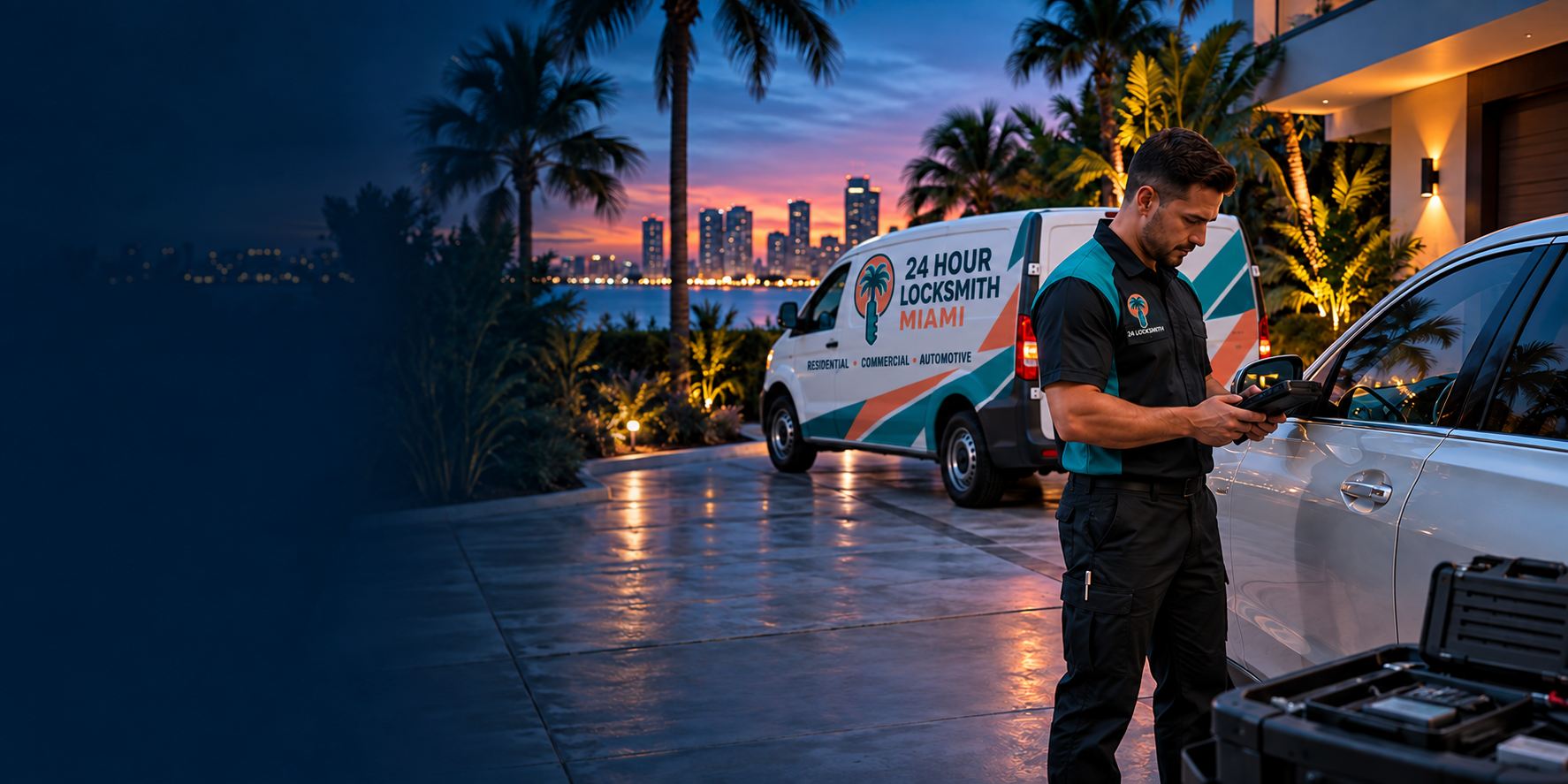
Shelter first, lock problem second
A lockout in dry, mild weather is an inconvenience. A lockout in a tropical downpour with thunder overhead is a different situation, because the risks are no longer only about the door. Lightning, flooded streets, slippery walkways, falling branches and reduced visibility all matter more than the time it takes to get the lock sorted. Your first job is to get yourself, and anyone with you, to a safe and dry place.
If anyone is in danger, if you believe someone inside needs help or if a storm has caused injury or flooding at your home, call 911. A locksmith is not an emergency responder, and in a true emergency the first call is to emergency services. For an ordinary lockout, where everyone is safe and the only problem is that you are outside, the sensible order is shelter first, then call, then plan.
It is easy to get fixated on the door when you are soaked and annoyed. Resist that. Nothing about the lock will be harmed by a delay of a few minutes while you find a dry place, and a locksmith who hears that you are sheltering and safe will be better able to plan the visit than one who hears that you are standing in a storm. A calm call helps the technician and you.
Where to wait while it pours
Good shelter has a solid roof and walls, not just an awning. If you are at a house, a covered porch can work for rain alone, but it is not safe during close lightning, because it leaves you near the highest and most exposed part of the building and possibly near metal railings and wiring. A vehicle with a hard roof is safer from lightning than open ground, if you have access to one. A neighbor's enclosed porch or a nearby business is better still.
If you live in an apartment or condominium, the building lobby, a mailroom or a laundry room can be a useful refuge. Tell the front desk what has happened, and ask whether you can wait inside. In a garden-style complex, ask the management office or a neighbor. In a house, ask a neighbor you know. If you do not know your neighbors, a nearby store, restaurant or gas station is a good alternative.
Stay away from trees during a storm, from standing water near power lines and from low spots where water collects. Heavy rain in Miami-Dade can flood a street quickly, and a flooded road or driveway can hide hazards. Do not wade through deep or moving water. If you see a downed power line, stay far away and call 911 and the electric utility. Our page on safe waiting while a locksmith arrives covers general principles that apply to any weather.
- Solid shelter with a roof and walls rather than an open porch or awning.
- A lobby, mailroom, neighbor's home or nearby business.
- Away from tall trees, metal railings and open ground during lightning.
- Away from standing water, low spots and any fallen wires.
- Never wade through deep or moving water.
Lightning and the rule of staying put
Thunderstorms are common in South Florida in the warm months, and lightning is the weather hazard that most often catches people off guard. If you can hear thunder, you are close enough to be struck. Move indoors or into a hard-topped vehicle and stay there until the storm has passed for some time. Do not stand at your door under a metal awning, and do not lean on metal gates or fences.
A locksmith will also be cautious about working in a lightning storm. A technician working at a door in the open, holding metal tools, is exposed, and a responsible technician will not risk it. If a storm is directly overhead, the technician may wait for it to pass or arrive and work from a sheltered position. Do not read a pause as neglect. It is a safety decision that protects both of you.
If you can, plan your wait around the weather. Most summer downpours in this region are intense and do not last long, though some weather systems linger. Check a weather app for the radar. If the storm will pass soon, a short wait may be enough. If a larger system is in the area, your plan should assume a longer delay and a more substantial shelter.
What to tell the dispatcher
Give your exact location, including the street address, the building or unit and the place where you are sheltering right now. If you are not at the door, say so, and say how the technician can find you. A technician arriving in heavy rain should not have to search for you.
Describe the door and the lock. Say what kind of door it is, such as a front door, a sliding door or a gate, and what the lock is, such as a deadbolt, a knob, a keypad or a smart lock. Say whether the lock is working normally or whether it has been acting up. In wet weather, a stuck or swollen door can mimic a lockout, and a keypad or electronic lock can fail when water reaches it. Those details help the technician understand whether the problem is a lost key or something else.
Mention whether the weather is still active, whether the street is flooded and whether the area has lost power. A flooded street may slow the technician or block access, and an area without power may affect electronic locks and garage doors. A truthful picture helps the dispatcher decide what is possible and tell you honestly. Quotes are given by phone only, and a service call charge is explained before anyone is sent. We do not promise arrival times, and in a storm, conditions on the road can change quickly.
What rain and humidity do to locks and doors
Sometimes a lockout is not caused by lost keys at all. Wet weather and humidity can swell wooden doors and frames, so that a door that usually closes easily binds in its frame, and a latch that usually catches may not line up. In that situation, the lock may be fine, and the problem is the fit of the door. A technician can often tell the difference at a glance. Our page on door frame repair and lock fit explains how swelling, shifting and wear can affect a lock.
Rain can also push moisture into lock cylinders and electronic hardware. A cylinder that has been wet may feel rough or stick, and corrosion can build over time, especially near the coast. Keypads and smart locks with exposed electronics can fail if water gets into the housing. If your lock stopped working during or after a storm, tell the dispatcher, since the answer may be drying, cleaning or replacing a component and not opening the door.
Salt air adds to the effect, as we describe in our guide on salt air and humidity lock wear. If you live near the water, a periodic look at your locks, and some attention from a professional when they feel rough, can head off a lockout on a stormy night.
Do not force a swollen or stuck door
If the door seems stuck rather than locked, you may be tempted to push, shoulder or pry it. Do not. Forcing a swollen door can break the frame, split the door or damage the lock, and in the rain it is easy to slip and hurt yourself. We do not provide instructions for bypassing locks, and forcing is not a substitute for proper tools and training.
A door that does not open may be locked, jammed by swelling, or blocked from the inside. Think about whether anything could be blocking it, such as furniture or a fallen object. Think about when you last used it and what the weather has been doing. These clues help the technician when you call.
If you have another way in that is safe and was not forced, such as a door someone left unlocked or a garage entry you can open with a remote you already own, use it. Do not climb onto roofs, balconies or ledges, especially when they are wet. A fall is a far worse outcome than a longer wait.
Vehicles, wet seats and rain lockouts
A car lockout in the rain adds a few concerns. If your keys are inside, check the windows and the roof for any gap that might let rain in while you wait, and note whether the engine is running. If it is, tell the dispatcher, and if there are any people or animals in the car, call 911. Wet pavement makes parking lots slippery, and a technician working outside needs a safe place to stand.
Tell the dispatcher about the weather when you call about a car. A technician may need to wait for a pause in lightning, and a sheltered spot such as a covered garage level makes the work easier and keeps the interior from getting soaked once the door is open. If your vehicle is outdoors, and you can wait nearby under a roof, do so.
Our page on lockouts in parking lots covers location, proof of ownership and verifying the technician, all of which apply in the rain as well as in sun.
Homes with children, older relatives or pets in a storm
A storm raises the stakes for anyone who is vulnerable to cold, heat or fear. Children can become frightened by thunder and may not understand why they cannot go inside. Older relatives may be unsteady on wet ground and tire quickly standing in a draft. Pets can panic at thunder and may bolt if a door or gate opens. If you are responsible for any of them, make their comfort and safety the first thing you handle.
Get children and older relatives into a dry, warm place, even if it is not your own home, and keep them within sight. Offer water and a place to sit. If an older person has health conditions, check that any medication they need is with them. If a pet is with you, keep it on a leash or in a carrier, and keep it away from open water and from areas where lightning is a risk.
If someone is inside the home and cannot get to the door, for example a child, an older person or someone who is unwell, call and speak to them if you can. If they are in distress or you cannot reach them, call 911 and tell the operator what you know.
Tell the dispatcher who is with you and who may be inside. It affects how the call is handled and may change the order in which things happen. Be honest and specific, and do not downplay a concern because you are embarrassed about the situation. A technician and a dispatcher have heard it all before, and what matters is that everyone is safe.
Power outages and flooding make it harder
Heavy rain in South Florida can knock out power and flood streets and driveways. When that happens, a lockout becomes more complicated. Electronic locks may stop working, garage doors may not open, and a technician may have trouble reaching you or finding a safe place to park. If your area is without power, tell the dispatcher at the start, since it may affect which door is the easiest to open and which tools the technician needs.
If your street is flooded, do not try to drive through it to meet the technician or to find shelter. Water that looks shallow can be deeper than it seems, and it can stall a vehicle and hide hazards. Stay where you are, in a safe place, and let the dispatcher know. If the situation worsens, for example if water is entering a building or rising around you, call 911.
Our page on smart lock problems during a power outage explains what to do when an electronic lock fails, and our page on lockouts and lock damage after a hurricane covers the larger recovery period after a major storm.
Verifying the technician in poor weather
Storms bring out opportunists. After a heavy downpour or a major weather event, some operators advertise aggressively, knock on doors or call people who did not ask for help. A genuine technician arrives after you called them. Be cautious about unsolicited offers, and do not hand over personal details or payment to anyone who approached you first.
When the technician arrives, check identification, the vehicle and the business name against what you were told on the call. A raincoat and a wet truck do not change the basic checks. Ask them to confirm the quote and the service call charge before work, and be wary if the charges change at the door. Our guide on verifying a locksmith lists practical steps.
If you are not comfortable, you may wait or decline. A genuine provider will understand.
After the door opens: dry out and check
Once you are inside, change out of wet clothes and dry off. Check that the door closes and locks properly, and look for any water that came in while it was open. If the lock or door was affected by moisture, ask the technician whether it needs attention soon. A swollen door may settle once the weather dries, but a lock that sticks is worth having looked at.
If a key was lost in the rain, think about where it might be, and consider whether to rekey the lock. A key lost in a flooded street or a parking lot could be found by anyone. Our page on lost house keys and what to do next explains the options.
When you are ready, call and tell the dispatcher your location, whether you are sheltered and what the lock is doing. A technician will explain the next step, the quote and the service call charge before anyone is dispatched. If the storm is still active, say so, and be ready for the possibility that safety will shape the timing.
Questions people ask
What should I do first if I am locked out in a thunderstorm?
Get to solid shelter and away from open ground, tall trees, metal railings and standing water. A lobby, a neighbor's enclosed space, a nearby business or a hard-topped vehicle is safer than an open porch. Make the call from there. If anyone is in danger, call 911 instead. The lock can wait for a few minutes.
Will a locksmith work during lightning?
A responsible technician will be cautious. Working at a door in the open with metal tools during close lightning is dangerous, so the technician may wait for the storm to pass or work from a sheltered position. We do not promise arrival times, and storms and flooded roads can change them. A pause is a safety decision, not neglect.
My door will not open after the rain. Is it locked?
Possibly not. Humidity and rain can swell wooden doors and frames so that the latch binds, even though the lock is fine. Do not force it. Tell the dispatcher what the door is doing and what the weather has been like, and a technician can tell whether it is a fit problem, a lock problem or both.
Can rain damage keypads and smart locks?
It can, if water reaches exposed electronics or the housing. A lock that stopped responding during or after a storm may need drying, cleaning or a replacement part. Tell the dispatcher when the problem began. Check any batteries as well, and ask the technician about protection from weather for your type of lock.
Should I climb in through a window to avoid waiting?
No. Wet surfaces make falls more likely, and forced windows and frames are expensive to repair and hard to secure. Do not climb onto roofs, balconies or ledges. If someone inside is in danger, call 911. Otherwise, shelter and wait for a technician to restore access with proper tools.
How are charges handled in bad weather?
Quotes are given by phone only, and a service call charge applies and is explained before anyone is dispatched. Complicated jobs may need an on-site visit before a final figure is set. If a technician introduces new charges at the door without a clear reason, you may decline before work begins.
Describe the situation by phone and we will tell you what the job involves. Quotes are given by phone. Jobs that cannot be quoted without seeing them need a technician on site, and the service call charge is explained on the phone before anyone is dispatched.
(786) 539-3980Related pages
Written by Claude (AI) (AI) for 24 Hour Locksmith Miami.