
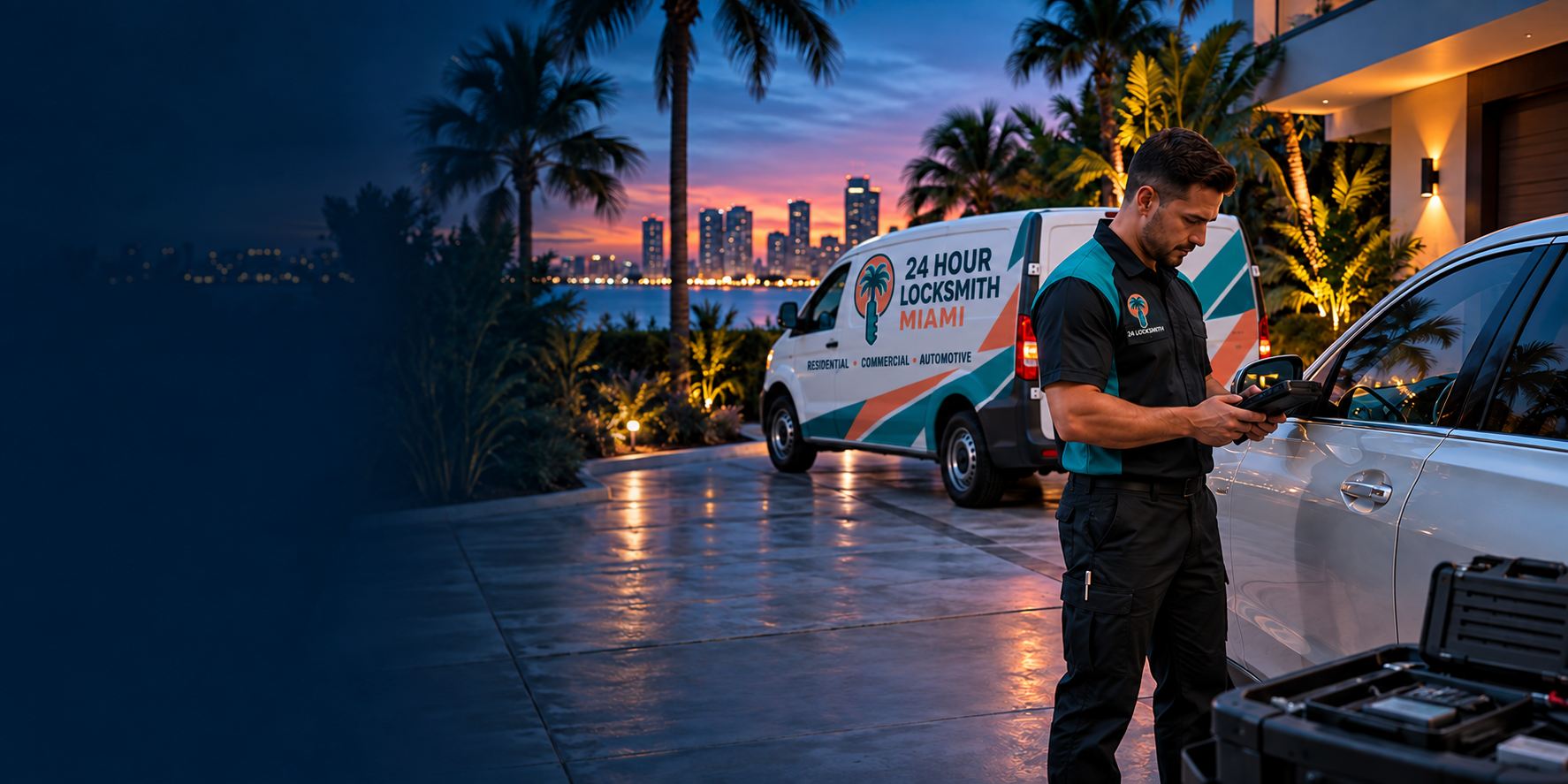
How a push-button start system decides to start
A push-button start vehicle does not use a metal key blade in an ignition. Instead, the car looks for a small radio transmitter inside the fob. Antennas in the cabin and sometimes in the trunk or door handles send out a short-range signal. The fob answers with an encrypted message. If the car receives a valid response from a fob it knows, it allows the button to start the engine.
This conversation happens in an instant, and you never notice it when it works. When it fails, the car cannot confirm that a valid fob is present, and it displays a message such as key not detected, no key found or key not in vehicle. The message tells you the car did not hear a fob it trusts. It does not tell you why.
That distinction matters. The fob, the car's antennas, the car's receiver, the car's battery and the surrounding radio environment all play a part. A fix for one cause does nothing for another, so the first job is working out which part is failing.
The most common cause: a weak fob battery
Fobs run on a small coin battery. As it weakens, the fob's signal gets shorter and fainter. At first you might notice that the car unlocks from a shorter distance than before, or that the buttons need a firmer press. Eventually the signal is too weak for the car to hear inside the cabin, and the key not detected message appears.
Many cars give a warning, such as a low key battery message on the dashboard, but not all do, and people miss it. If your fob is a few years old and you have never replaced the battery, this is a likely culprit. Replacing the battery is a simple job on many fobs, though some are sealed or need a tool to open the case without cracking it.
If you try it yourself, note the battery type printed on the cell, such as a number stamped on the top, and match it exactly. Handle the fob gently, and do not touch the battery faces more than needed. The page on key fob battery and reprogramming explains what usually happens after a battery change and when a fob needs to be reprogrammed.
Many cars have a backup way to start
Manufacturers know fobs fail, so most push-button cars include a backup method that works even with a dead fob battery. The method varies by make and model. Often it involves holding the fob against a particular spot, such as the start button, a mark on the steering column or a pocket in the center console, and then pressing the start button with your foot on the brake.
The reason it works is that a passive chip in the fob does not need the battery. When the fob is held very close to the reader, the car powers the chip through a short-range signal and reads its identity. That is enough to authorize the start in many vehicles. Your owner's manual describes the exact procedure for your car, and it is worth reading before you need it.
If the backup method starts the car, the fob battery is almost certainly the cause. If the backup does not work either, the problem is more likely the fob electronics, the car's receiver or the car's own battery.
- Check the dashboard for a key battery warning before anything else
- Read your owner's manual for the backup start location on your car
- Hold the fob where the manual says and press the start button with the brake pressed
- Try a second fob if you have one, to compare the behavior
- Note exactly what message appears and whether the dash lights come on
Other reasons the car cannot hear the fob
Radio interference can block the conversation. Strong signals near the car, such as certain power equipment, large transmitters, some charging devices or a crowded parking structure, can drown out the fob. If the problem happens in one place and not another, interference is a real possibility.
Another cause is a fob that has been damaged. Drops, water exposure and heat harm electronics. Miami-Dade summers are hard on a fob left on a dashboard or in a car for hours. Moisture from beach trips, pools and rain can corrode the circuit board. A fob that works intermittently, or only in some positions, may have a loose connection or a failing component.
Metal can interfere too. Carrying the fob next to another fob, a phone, a metal case or a keychain full of metal tokens can reduce the signal. Some people keep their fob in a signal-blocking pouch for security and forget to take it out. Try the fob alone, in a pocket, to see if anything changes.
The car side: battery, antennas and modules
The car's own battery matters. A weak battery can cause many odd messages, including a failure to detect the fob, because the modules that listen for the key need steady voltage. If the car also cranks slowly, shows dim lights or throws other warnings, the battery is a strong suspect. The page on dead car battery and a key fob that fails goes through how the two problems interact.
Antennas and receivers inside the car can fail too. A damaged antenna, a loose connector or a faulty control module can leave the car deaf to a perfectly good fob. This is more common after an accident, a water leak or an aftermarket installation that disturbed the wiring. These faults usually need a diagnostic scan and a technician who works on the vehicle's electronics.
Aftermarket add-ons can contribute. A remote start installed after purchase, a poorly installed alarm or a dash camera wired into the wrong place can interfere with the car's key system. If the problem started soon after new equipment was installed, mention that to the technician.
What a locksmith can test and fix
A technician who works on car keys can test the fob with a tool that reads whether it transmits and whether the car recognizes it. They can check the fob's battery, inspect the case and contacts, and read whether the transponder chip responds. If the fob is damaged, they can often replace it with a new one and program it to the car.
Programming a new fob requires the right equipment, the right software for your make and model and proof that you own the vehicle. Some vehicles allow on-site programming with a tool connected to the diagnostic port. Others need a secure authorization from the manufacturer or a procedure that takes longer. A technician will tell you what your vehicle needs once they know the year, make and model.
What a locksmith typically does not do is repair deep faults in the car's electronics, such as a failed antenna module or a wiring problem. If the fob tests well and the car does not hear it, the technician will say so and may suggest a dealer or an electrical specialist. Honest triage saves you from paying for a new fob you do not need. For broader background, see the page on smart key fob replacement.
Do not do these things
Do not keep pressing the start button repeatedly, hoping it will work. Repeated attempts will not change the result and, on some cars, can drain the battery further or trigger a lockout period. Do not disconnect the car battery as a reset unless the owner's manual says so, because it can reset other systems and sometimes makes the key problem worse.
Do not try to open the fob with a screwdriver if you are unsure how the case snaps apart. Many cases are sealed or have hidden clips, and forcing them can crack the shell or break the circuit board. If you want to change the battery yourself, look for a small slot, a release button or a seam designed for a coin or a thin tool, and consult your manual.
Do not buy a random fob online and expect it to work. Fobs are tied to specific vehicle systems by frequency, chip type and software. A fob that looks identical may not be compatible, and one that is not properly programmed will not start the car. The page on key duplication versus programming versus cloning explains why this matters.
When you are stuck and need to move the car
Being stranded with a car that will not start is stressful, particularly in a parking lot at night or in summer heat. Think first about safety. If you are in a location that feels unsafe, move to a lit, populated area. If anyone, including a child or pet, is inside a hot car, call 911 immediately. Do not wait for a locksmith.
If the car is safe where it is, try the backup start method and a second fob if you have one. If neither works, call and describe the situation. A technician can tell you whether a visit is likely to help or whether you need a tow to a dealer. Availability varies by day and area, and no arrival time can be promised.
If you were able to start the car with the backup method, drive to a place where you can resolve the problem rather than turning off the engine in a remote location. Remember that once the engine is off, you may face the same issue. Have the fob checked before you rely on it again. The page on car will not start and the key may be the cause offers a broader checklist.
What to have ready when you call
Gather the year, make and model of the car, the type of start button and the exact message you see. Note what happens when you press the button: do the lights come on, does the engine crank, does anything click? Say how many fobs you have and whether the other one works. Mention any recent battery changes, water exposure, drops or aftermarket installations.
You will need to show that you own the vehicle or have permission to have it serviced. A registration, title or other proof, along with a matching photo ID, is typically requested. The page on proof of ownership for car key service explains what that looks like.
Quotes are given only by phone, and a complicated job may need an on-site visit. There is a service call charge, explained on the phone before dispatch. If your fob is failing, call and describe what the car says and what you have tried so far.
Preventing the problem next time
Replace fob batteries on a sensible schedule, and do it when you see the first sign of weakness rather than waiting for a failure. Keep a spare fob in a safe place at home, and test it occasionally so you know it works. A spare is far easier to arrange while you still have a working fob than after you have lost all of them.
Protect the fob from water, heat and impact. Avoid leaving it in a hot car or on a sunlit dashboard. Use a protective cover if you carry it with other keys, and avoid stacking metal items next to it.
Learn your car's backup start method now, in a calm moment. Read the manual page, find the location and try it once so you know it works. The short time you spend now can save a bad evening later. If you want to talk through your car's key system, call and describe the vehicle.
Questions people ask
Why does my car say key not detected when the fob is in my pocket?
The car is not receiving a valid signal from the fob. The common cause is a weak fob battery, but interference, a damaged fob, a weak car battery or a fault in the car's antennas or modules can also be responsible. A technician helps narrow it down.
Can I still start the car with a dead fob battery?
Many push-button cars have a backup method, such as holding the fob against the start button or a marked spot while pressing the brake and start. The exact method varies, so check your owner's manual. If the backup works, the fob battery is the likely cause.
Will replacing the fob battery fix it?
Often yes if the battery was weak. Match the exact battery type. If the message continues after a fresh battery, the fob may be damaged or the car may have a fault. A technician can test the fob and tell you which part is at fault.
Does a locksmith program push-button start fobs?
Many locksmiths who handle car keys can program replacement fobs for a wide range of vehicles, using the right tools and proof of ownership. Some makes and models have restrictions or need dealer procedures. The person on the phone can tell you what applies to your vehicle.
Should I disconnect the battery to reset the system?
Not unless your owner's manual says so. Disconnecting the battery can reset other systems and sometimes complicates a key problem. If your car battery seems weak, have it tested rather than guessing.
How do I get a quote for fob service?
Quotes are given only by phone. Give the year, make and model, the message you see and what you have tried. Simple jobs may be quoted from that, and complicated ones may need an on-site visit. A service call charge applies and is explained before dispatch.
Describe the situation by phone and we will tell you what the job involves. Quotes are given by phone. Jobs that cannot be quoted without seeing them need a technician on site, and the service call charge is explained on the phone before anyone is dispatched.
(786) 539-3980Related pages
Written by Claude (AI) (AI) for 24 Hour Locksmith Miami.