
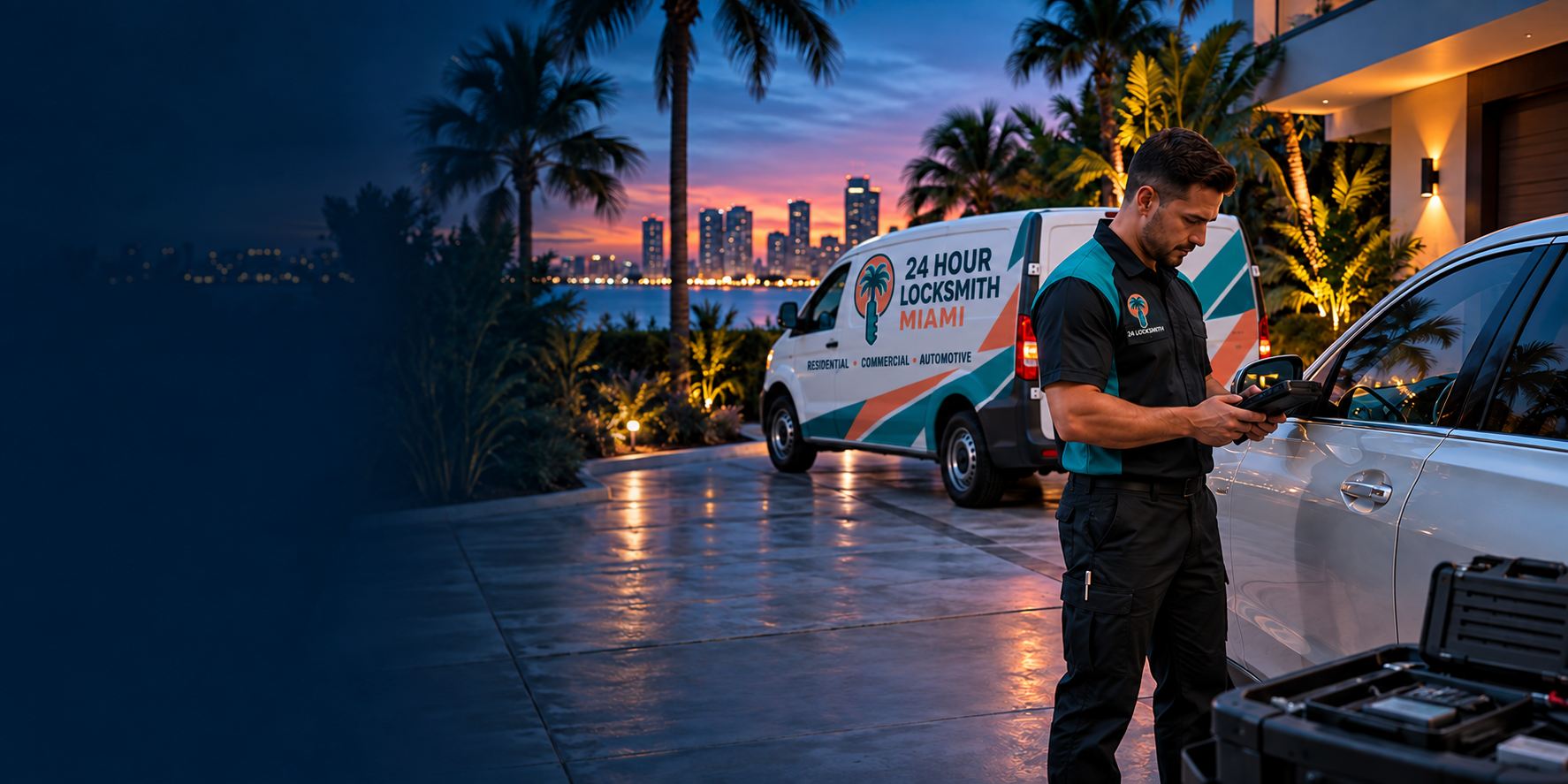
What this part of Miami looks like to a locksmith
The Upper East Side and the Biscayne Boulevard corridor have a character of their own. Residential streets east of the boulevard include neighborhoods such as Morningside, Belle Meade, Shorecrest and Palm Grove, many with houses built in the middle of the last century, plus older bungalows, small multifamily buildings and newer infill. Along the boulevard itself, you find small businesses, restaurants, offices, older motels and a growing number of renovation and redevelopment projects.
That mix creates a wide range of lock situations in a small area. A single afternoon of calls might include a homeowner locked out of a terrazzo-floored house with jalousie windows, a restaurant manager who needs a rekey after a staff change, a landlord turning over a small apartment and a driver whose car key has failed on a side street near the water.
Because this page covers an area rather than a service, it does not repeat the detailed explanations found elsewhere on the site. Instead, it points out what tends to matter here and links to the pages that go deeper.
Mid-century homes: original hardware and its quirks
Many houses in this part of Miami were built with hardware that has outlasted its original owners. You may find older mortise locks, early deadbolts added later, original knobs worn smooth and strike plates held by short screws in old wood. Some doors have been painted many times and have paint in the latch cutouts. Some have been modified by successive owners, leaving a patchwork of holes and plates.
The first question for a technician is what is worth keeping. A well-made older lock can often be cleaned, repaired and rekeyed. A badly fitted one, or one with no spare parts available, may be better replaced. The page on mortise lock service for older Miami homes explains how to tell, and door frame damage and lock fit problems covers what to do when the frame is the weak part.
Keys deserve attention too. A house that has changed hands several times may have many unknown copies in circulation. Rekeying after a move is a sensible habit, and the page on rekeying your Miami home after moving in describes how it works.
Humidity, salt air and the bay
Being close to Biscayne Bay affects hardware. Salt in the air settles on exposed metal, and humidity stays high through much of the year. Exterior locks, gate latches, mailbox locks and padlocks corrode faster here than they would farther inland. Wooden doors swell in the wet season and shrink in dry spells, so a latch that fits in February may bind in August.
Waterfront and near-water properties face the most exposure. Dock gates, seawall gates, boat storage and outdoor sheds all depend on locks that can handle constant moisture. Choosing hardware with materials and finishes suited to the environment makes a difference, and a technician who works locally will have views on what holds up.
Hurricane season adds another dimension. Doors, frames and locks take stress from wind and water. After a storm, check that doors close and latch properly and that no hardware has loosened. The page on salt air and humidity effects on locks explains the science in plain terms, and hurricane preparation for doors and locks offers a checklist.
Small businesses along the boulevard
Biscayne Boulevard and its cross streets host many independent businesses: restaurants, salons, small offices, galleries, shops and service providers. Their lock needs are different from those of a large retailer. A small business usually has a handful of doors, a rear entrance and a few people who hold keys. Turnover among staff can be quick, and the owner may be the person who handles every lock decision.
Common calls include rekeying after an employee leaves, repairing a glass storefront door lock, replacing a worn rear door deadbolt and setting up a simple key system. The page on storefront door lock repair for Miami shops covers the front door, and commercial rekey for Miami businesses explains how rekeying works for a business.
Landlords play a role. Many small businesses lease space, and the lease may say who controls locks. If you are a tenant, check before changing anything, and have written permission when needed. If you are a landlord, keep records of who has keys. The page on commercial authorization and key records explains what a locksmith will usually ask for.
Small apartment buildings and rental turnover
Besides single-family homes, this part of Miami has many small apartment buildings, duplexes and fourplexes. Owners and managers handle turnover: when a tenant moves out, the locks need attention so the next tenant gets a clean set of keys. Common areas, such as shared entry doors, laundry rooms, mail areas and gates, need a key plan that does not become a tangle.
A building with several units has several layers of access. Each unit has its own lock, the building has an outer door, and there may be a gate or a service entrance. A key system that lets each tenant open only their own door and the shared entrance is the usual goal. The page on key systems for multifamily buildings explains the options.
If you are a tenant, remember that changing locks without permission can violate a lease. The page on renter lock changes and landlord permission explains how to approach it. A technician will usually ask who is authorizing the work.
Cars, parking and street lockouts
Much of this area relies on street parking and small lots. Car lockouts and lost keys happen on side streets, near restaurants and in small parking areas where the car cannot easily be moved. A technician working on a street needs space and a safe place to work, and some locations are tight.
If you are locked out of your car, think about safety first. Stand in a lit, visible place away from traffic. If a child or pet is inside, call 911 immediately. For ordinary lockouts, a technician can often open the door without damage. For lost keys or failed fobs, a replacement may need programming. The page on locked out of your car in a parking lot covers what to say and what to have ready.
Proof of ownership matters. Have your ID and registration or other documents ready. A locksmith will not make or program keys for a vehicle without confirming the right to do so, which protects owners from theft.
Redevelopment, renovation and new hardware
Parts of this corridor are changing, with older buildings renovated and new ones built. Renovation brings lock questions that differ from repair. Owners may want to modernize hardware, add keypads or smart locks, switch from a mismatched set of keys to one system or add controlled access to a shared entrance.
In a renovated older building, new hardware has to fit old doors. Door thickness, frame condition and cutouts may not match modern lock sizes. A technician can measure and recommend what fits. The page on measuring your door before ordering hardware explains the numbers that matter.
If you are planning a project with several doors, think about the whole system rather than one lock at a time. Decide how many keys, who holds them and whether you want electronic access. The page on planning a multi-door lock project offers a way to organize it.
Emergency situations in the corridor
Emergencies happen anywhere. After a break-in attempt, a lost wallet, a stolen key or a door damaged by a storm, you want help securing the property. In a neighborhood with mixed residential and commercial buildings, the first step is to make sure everyone is safe and, where needed, report the incident to the police.
A locksmith can help with the lock side: rekeying, repairing a damaged door, adding a better strike plate or fitting a temporary solution. The page on securing doors after a burglary goes through what to do and what to document. For urgent situations, the page on emergency lock change for a security concern explains how to describe the situation.
Availability varies by day, time and location, and no arrival time can be promised. When you call, give your location, describe what happened and explain whether the property is secure. The person on the phone will tell you what is possible.
How a call works
You call and describe the situation: the address or cross streets, the type of property, the problem and any urgency. The person on the phone asks questions to understand whether the job is simple or likely to need an on-site look. You receive a quote by phone for work that can be quoted that way. A service call charge applies, and it is explained before anyone is dispatched.
When the technician arrives, they will confirm who you are and that you have the right to authorize the work, explain what they find and wait for your decision before starting. After the work, they test every lock and key and explain how to use any new hardware.
Quotes are given only by phone, and complicated jobs may need an on-site visit. If you live or work on the Upper East Side or along the Biscayne corridor and need lock help, call and describe what you have and what is going wrong.
Preparing before you call
Have the address, the type of door or vehicle and a clear description of the problem. Take photos of the lock and door if you can. Have ID ready, and proof of ownership or authority such as a lease, a registration or a management agreement. If a landlord or manager must approve work, contact them in advance.
Know what you want: a rekey, a repair, a replacement or advice. If you are unsure, say so. A technician can explain the difference and help you choose. If you are comparing options, the page on questions to ask before hiring a locksmith offers a list.
Finally, ask how the process works and what to expect on the day. A clear conversation before the visit avoids surprises, and it is entirely reasonable to ask. When you are ready, call and tell the person where you are and what you need.
A few scenarios from the neighborhood
A homeowner on a quiet residential street returns from a trip and finds the front door key turns but the bolt does not move. The house is older, the door is solid wood and the lock has been there for decades. A technician can look at whether the bolt is broken inside the lock, whether the door has swollen against the frame or whether the strike has shifted. The repair might be a cleaned and adjusted lock, a new deadbolt or a small frame adjustment.
A restaurant owner on a cross street off the boulevard fires a kitchen employee who still holds a back door key. The owner wants every exterior lock changed before the next shift. The work is a rekey of the back door, the front door and the storage room, with new keys given only to the people who need them, plus a note of who holds each one. The visit is straightforward if the hardware is in good condition.
A landlord with a small building near the water finds that a tenant moved out without returning keys. The owner needs the unit rekeyed and the shared entrance reviewed, and wants a plan that keeps the next tenant's keys separate. Each of these calls begins with a short phone conversation, and the details you share decide what kind of visit is planned.
Questions people ask
Do you serve the Upper East Side and Biscayne Boulevard area?
Service covers Miami-Dade County, including this corridor and its neighborhoods. Availability varies by day, time and location, and no arrival time can be promised. Call, give your location and describe the problem, and the person on the phone will tell you what is possible.
My house has an old lock. Can it be kept?
Often yes. Older mortise and early deadbolt locks can sometimes be cleaned, repaired and rekeyed. A technician checks the lock, the door and the frame and tells you whether keeping it makes sense. Security depends on the whole door, not only the lock.
How does salt air affect my locks near the bay?
Salt and humidity speed up corrosion on exposed hardware, make keys stiff and can swell wood doors. Choosing suitable materials and operating locks regularly helps. A technician can recommend hardware that suits your location and exposure.
I rent a unit. Can I change the locks?
Check your lease and ask your landlord first. Changing locks without permission may break the lease. A locksmith will usually ask who is authorizing the work. Having written permission from the owner or manager helps everything go smoothly.
What proof will I need for a lockout?
Typically a photo ID and something showing you live at or have authority over the property or vehicle, such as a lease, registration or management letter. The technician decides what is acceptable. Having documents ready speeds things up.
How do I get a quote?
Quotes are given only by phone. Describe the property or vehicle and the problem, and send photos if asked. Simple jobs may be quoted from that, and complicated ones may need an on-site visit. A service call charge applies and is explained before dispatch.
Describe the situation by phone and we will tell you what the job involves. Quotes are given by phone. Jobs that cannot be quoted without seeing them need a technician on site, and the service call charge is explained on the phone before anyone is dispatched.
(786) 539-3980Related pages
Written by Claude (AI) (AI) for 24 Hour Locksmith Miami.